Could a single productivity app replace scattered to-do lists, clunky calendars, and separate smart home controls—and actually help you focus more?
Smarters Pro is a productivity platform built to centralize task management, home automation, and intelligent scheduling for busy professionals and households across the United States. It connects common smart home devices like Amazon Echo, Google Nest, Philips Hue, and Ring so you can manage lights, alerts, and routines without switching apps.
The primary benefits are clear: reduce task friction, consolidate controls for connected devices, and automate routine work to boost your efficiency and increase focused output. Remote workers, small business owners, parents balancing home and work, and tech-savvy consumers will find efficient solutions that fit daily life.
This article will explain core features of Smarters Pro, show integration techniques, present real use cases, recommend gadgets and accessories, and offer setup best practices so you can measure productivity gains and ROI. Expect friendly, practical guidance you can apply right away.
Key Takeaways
- Smarters Pro centralizes tasks and smart home devices for smoother workflows.
- Automations cut routine work, helping users boost your efficiency.
- Designed for remote workers, small business owners, parents, and tech-savvy users.
- Integrates with Amazon Echo, Google Nest, Philips Hue, and Ring for seamless control.
- The article outlines setup tips, gadget recommendations, and ways to measure ROI.
Why Smarters Pro Is a Game-Changer for Productivity
Smarters Pro brings together task management, device control, and analytics in one place. The app uses innovative technology and intelligent systems to cut down on context switching. Users gain efficient solutions that free up time for focused work.
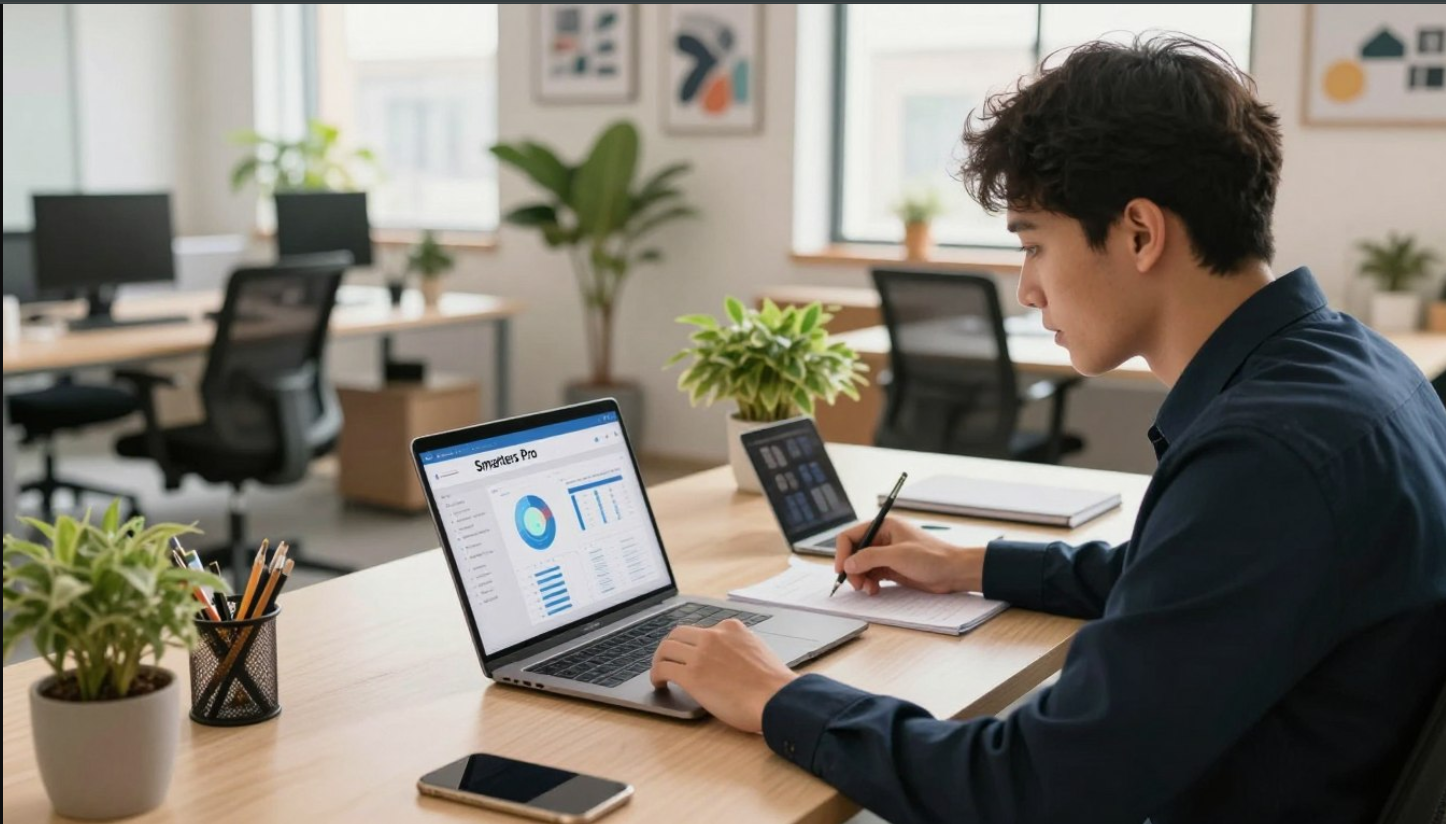
The unified dashboard shows tasks, calendar events, device states, and notifications at a glance. That reduces app switching and keeps priorities visible. Productivity features include templates, presets, and analytics to track time saved and trends.
The automation builder uses drag-and-drop rules to run routines by time, location, device status, or calendar events. Smart priorities and focus modes mute interruptions and surface high-impact tasks using built-in algorithms. Integrations with Google Calendar, Microsoft 365, Slack, Trello, Philips Hue, Nest, and Alexa extend control across work and home.
Overview of core features that boost efficiency
The dashboard centralizes tasks and device states so you won’t flip between five apps. Automations trigger actions like changing lights, locking doors, or launching meeting links when a calendar event starts.
Smart priorities raise critical items while focus modes limit alerts. Templates and presets shorten setup time when creating new routines or workflows. Analytics report on time saved, showing measurable productivity gains.
How Smarters Pro compares to traditional productivity tools
Unlike single-purpose apps such as Todoist or Google Calendar, Smarters Pro blends task management with home and office device control. This mix reduces the mental load of coordinating devices and schedules by automating those steps.
Classic tools still perform well for deep project planning and simple to-do lists. Smarters Pro complements those tools by handling environmental setup and routine automation, delivering efficient solutions that plug into an existing stack.
Real-world scenarios where Smarters Pro saves time
A remote worker can have their phone muted, lights set to focus, and the correct Zoom room launched when a meeting starts. These automations cut wasted minutes and reduce interruptions.
A parent can run an evening routine that secures smart locks, adjusts the thermostat, and queues dinner prep tasks. That keeps the household running while chores and caretaking demand attention.
A small office can set conference room lighting and AV to meeting presets and push post-meeting action items to Slack or Microsoft Teams. The result is fewer missed tasks and faster follow-up.
| Capability | Smarters Pro | Traditional Tools | Benefit |
|---|---|---|---|
| Task & Calendar View | Unified dashboard for tasks, calendar, and devices | Separate apps for tasks and calendar | Reduced app switching |
| Automation | Drag-and-drop automation builder tied to device states | Limited or no device automation | Time savings through automated routines |
| Focus & Priorities | Smart priorities and focus modes with algorithms | Manual do-not-disturb or simple priority tags | Fewer interruptions, clearer focus |
| Integrations | Google Calendar, Microsoft 365, Slack, Trello, Philips Hue, Nest, Alexa | Integrations focused on productivity apps only | Bridges home automation with work tools |
| Analytics | Templates, presets, and time-saved reporting | Basic completion stats or none | Measurable productivity insights |
Integrating Smart Home Devices for Seamless Workflows
Bringing smart home devices into your daily routine turns scattered gadgets into a single, useful system. Smarters Pro links common brands like Philips Hue, Google Nest, Ring, and TP-Link Kasa so you can automate tasks and cut friction from morning and workday rituals.
Connecting smart home devices to automate routine tasks
Start by authorizing devices through OAuth or the manufacturer API inside Smarters Pro. Assign gadgets to rooms or zones and group them for multi-device routines. A typical pre-work routine might power a smart plug for your coffee maker, brighten Philips Hue lights, and set a Nest thermostat to a comfort temperature.
Best practices for linking with voice assistants
Link Smarters Pro to Amazon Alexa, Google Assistant, or Apple Siri Shortcuts when supported. Use clear, consistent names for devices and routines so voice assistants recognize commands reliably. Confirm Smarters Pro schemas (phrases) to avoid ambiguous triggers and test voice-activated automations before relying on them.
Keep fallback controls in the Smarters Pro app for critical actions. Create short voice phrases that map to single routines rather than chains of commands. This reduces errors when multiple connected devices respond at once.
Security considerations when integrating connected devices
Use manufacturer-provided secure authentication and enable two-factor authentication for Smarters Pro and linked accounts. Grant each device only the permissions it needs; avoid giving camera-streaming access when status checks suffice.
Keep firmware current on routers and smart devices. Place IoT gadgets on a separate VLAN or guest network to limit exposure. Periodically review privacy policies for integrated services and disable any integrations you no longer use.
Following these steps helps you build dependable automations that blend convenience with practical security. Thoughtful setup keeps voice assistants responsive and connected devices working together without creating extra risk.
Leveraging Innovative Technology to Streamline Tasks
Smart home gear and connected office devices turn routine work into simple triggers. Smarters Pro ties sensors, cameras, and smart plugs into clear automations that cut steps from daily workflows.
Automation features use motion, door, and presence sensors to start focused sessions when someone enters a home office. Smart cameras and occupancy sensors feed room-usage data to Smarters Pro so lighting and HVAC adapt without manual control.
Smart plugs and appliance controllers handle repetitive chores like starting coffee or powering printers at the workday’s start and shutoff. Those small automations save minutes every day that add up to real productivity gains.
Automation features powered by advanced gadgets
Set rules that combine sensors with schedules. For example, a presence sensor plus calendar data launches a meeting-ready routine that adjusts lights, mutes notifications, and brings up agenda items on a display.
Use geofencing and door sensors to trigger leaving-home routines that lock doors, arm security, and lower the thermostat. Smarters Pro links device states to clear actions so people don’t worry about forgetting tasks.
Examples of time-saving intelligent systems
Presence-based routines secure the house and generate checklists automatically when the last person leaves. Meeting-ready routines prepare rooms and reduce setup time before calls. Energy-optimization systems shift appliance schedules based on electricity rates or solar output to save time and money.
A small business might use occupancy sensors to route deliveries to staffed zones, cutting back-and-forth trips. Remote teams benefit when Smarters Pro readies workspaces before deep-focus periods.
How machine learning enhances task prioritization
Smarters Pro applies machine learning to calendar trends, completion history, and behavior patterns. Models suggest priority tasks and ideal focus windows by learning when users do their best work.
Predictive scheduling recommends deep-work times based on past performance and time-of-day energy. Anomaly detection spots missed routines or odd device activity and nudges users with corrective steps or alerts.
| Use Case | Devices Involved | Benefit |
|---|---|---|
| Meeting-ready routine | Smart display, smart lights, microphone mute | Reduces setup time and meeting friction |
| Presence-based leaving routine | Door sensors, smart lock, thermostat | Improves security and saves energy without manual steps |
| Coffee and printer schedule | Smart plugs, appliance controllers | Automates morning rituals and reduces downtime |
| Energy optimization | Solar inverter API, smart thermostat, smart plugs | Lowers bills and aligns tasks to low-cost periods |
| Predictive focus windows | Calendar integration, occupancy sensors, ML engine | Boosts deep-work productivity through tailored timing |
Creating Efficient Solutions with Smarters Pro
Start by mapping daily pain points and repetitive tasks. Turn those into rule-based automations and conditionals inside Smarters Pro to reduce friction and free time.
Design workflows that match your day. Use broad routines for morning, work, and evening blocks. Add micro-routines for exceptions like deliveries or urgent calls.
Use triggers such as time, calendar events, device state, and location. Pair triggers with actions like device control, notifications, and task creation. This approach builds end-to-end solutions that feel natural.
Templates and presets speed setup. Start with built-in options like Morning Routine, Meeting Mode, Away Mode, and Focus Session. Customize defaults to suit your home or office.
Explore community and vendor presets for devices from Philips Hue and Nest. Those tested action chains cut trial time and lower friction when you adapt scenes and schedules.
Track metrics to measure gains. Log time saved per routine, fewer manual tasks, longer uninterrupted focus, and energy savings from automated HVAC and lighting.
Export Smarters Pro analytics to CSV or Google Sheets to quantify changes over weeks. Translate time saved into monetary value for small teams by applying hourly rates and counting reduced energy costs.
Below is a simple table to compare routine types and key metrics for evaluating productivity ROI.
| Routine | Primary Trigger | Typical Time Saved / Week | Key Benefit |
|---|---|---|---|
| Morning Routine | Time of day | 30–90 minutes | Faster startup, consistent environment |
| Meeting Mode | Calendar event | 10–40 minutes | Fewer interruptions, clearer audio/video setup |
| Away Mode | Location or manual | 5–25 minutes | Energy savings, security |
| Focus Session | Manual or app timer | 60–180 minutes | Longer uninterrupted work blocks |
Use these comparisons to refine your design workflows and choose which templates and presets to deploy first. Small changes add up and improve your productivity ROI with measurable results.
Advanced Gadgets and Accessories That Complement Smarters Pro
Choosing the right mix of advanced gadgets and home office accessories makes Smarters Pro more powerful. The right setup cuts friction, keeps focus, and helps routines run without extra effort.
The list below highlights connected devices that pair well with Smarters Pro and improve daily workflow. Each pick supports common standards and voice assistants to ease integration with compatible intelligent systems.
- Smart lighting: Philips Hue and LIFX bulbs offer adjustable color temperature to match work hours and reduce eye strain.
- Smart thermostat: Google Nest and ecobee keep temperature steady for comfort and energy savings during long sessions.
- Smart displays and speakers: Amazon Echo Show and Google Nest Hub provide quick voice controls, meeting cues, and visual timers.
- Webcam and microphone: Logitech Brio and Blue Yeti deliver clearer video and audio for remote calls and Smarters Pro meeting presets.
- Smart plugs and strips: TP-Link Kasa and Belkin power accessories on schedules and save energy when idle.
Ergonomic home office accessories play a big role in sustaining focus. A few well-chosen items reduce fatigue and support longer, productive stretches.
- Adjustable standing desks from Uplift or Vari with presence sensors to prompt movement breaks.
- Ergonomic chairs such as Herman Miller and Steelcase to reduce back strain and improve posture.
- Noise-cancelling headphones like Sony WH-1000XM5 and Bose 700 that sync with focus routines to mute distractions.
- Monitor arms, keyboard trays, and blue-light filtering screens to keep eyes and wrists comfortable.
Use this compatibility checklist before adding new hardware to Smarters Pro. Confirming items prevents integration headaches and keeps automations reliable.
- Check supported standards: Matter, Zigbee, Z-Wave, Wi-Fi, Bluetooth, or a cloud API.
- Verify firmware is current and that third-party integrations work via OAuth or local LAN control.
- Confirm voice assistant support for Alexa, Google Assistant, or Siri and ensure Smarters Pro connectors exist for each brand.
- Review power and network needs; place critical devices on wired Ethernet or a stable Wi‑Fi band.
| Device Category | Top Picks | Key Benefit | Integration Notes |
|---|---|---|---|
| Smart Lighting | Philips Hue, LIFX | Adjustable color to match circadian rhythm | Works with Matter, Zigbee, Wi‑Fi; link to Smarters Pro scenes |
| Thermostat | Google Nest, ecobee | Comfort and energy savings during work hours | Supports cloud API and local control; verify OAuth setup |
| Speakers & Displays | Amazon Echo Show, Google Nest Hub | Voice control and visual meeting prompts | Native Alexa/Google integration; ensure Smarters Pro connector |
| Webcam & Mic | Logitech Brio, Blue Yeti | Professional audio/video for calls | USB devices pair with PC routines in Smarters Pro |
| Smart Plugs | TP-Link Kasa, Belkin | Automate peripheral power and schedules | Wi‑Fi based; check device discovery and naming |
| Ergonomics | Uplift, Vari, Herman Miller, Steelcase | Reduces fatigue and supports longer focus | Pair desks with presence sensors; chair choice is manual |
| Headphones | Sony WH-1000XM5, Bose 700 | Noise cancellation for deep work | Bluetooth pairing; use focus routines to mute notifications |
Setting Up Home Automation for a Distraction-Free Day
Smart setups make focused work simple. With the right approach, home automation can create reliable cues that reduce interruptions and keep your day distraction-free. Use clear rules so every device knows when to help and when to stay out of the way.

Scheduling routines to reduce interruptions
Build focus windows that trigger Do Not Disturb on phones and mute nonessential app alerts during deep work. Link lighting and thermostat changes to those windows to cue your brain that it is time to concentrate.
Create automations that update Slack or calendar status to “In Focus” when a routine starts. Let the same routine restore notifications and lighting when it ends so transitions feel natural.
Using geofencing and presence detection to automate context
Use smartphone geofencing to switch modes when you arrive at your home office or leave for the day. Smarters Pro can trigger arrival routines that set devices for work mode and departure routines that save energy.
Combine presence detection from smart locks or motion sensors to fine-tune automations. For example, lower background music when only one person is present. Test radii and sensitivity to protect battery life and privacy.
Tips for balancing automation with manual control
Keep manual overrides and a clear “pause automation” option in the app and on physical controls like wall switches. Confirm critical actions such as unlocking doors or disarming alarms to avoid mistakes.
Roll out automations slowly. Start with a few noncritical routines, gather feedback, and expand. This method helps maintain a distraction-free environment while preserving your sense of control.
Practical Tips for Getting the Most Out of Smarters Pro
Start each morning by opening Smarters Pro and accepting the prioritized task list it suggests. This habit turns planning into action and reinforces daily productivity habits. Use the app’s suggested focus windows to block distractions and protect peak energy times.
Set scheduled micro-break reminders linked to smart lights or a standing desk. Short pauses improve focus and prevent burnout when you follow these practical tips consistently. Close the day with a quick wrap-up: log wins, archive finished tasks, and set the top three priorities for tomorrow.
Customization strategies help match Smarters Pro to your work style. Deep-focus users should extend long focus windows, silence notifications automatically, and use warm-cool light transitions to support energy levels. Multitaskers benefit from shorter, frequent task batches and visual cues from smart bulbs to mark task categories.
Teams can adopt standardized meeting room presets and shared routines. Role-based automations work well when managers and individual contributors get tailored actions. These customization strategies keep everyone aligned while cutting setup time.
Troubleshooting setup starts with the basics for connectivity problems. Reboot routers, check device firmware, and confirm devices are on the right network band (2.4 GHz versus 5 GHz). These steps fix most dropouts quickly.
If third-party integrations fail, reauthorize accounts and validate API tokens. Check the Smarters Pro supported list to confirm device compatibility. For automations that don’t fire, inspect trigger conditions, verify time-zone settings, and look for overlapping rules that might block actions.
Enable logs in Smarters Pro for diagnostics when problems persist. Keep vendor support pages handy for Amazon, Google, Philips Hue, and Nest to cross-check device behavior. Clear logs and a step-by-step check often resolve stubborn issues fast.
Customer Success Stories and Use Cases
Real teams and families share practical wins from using Smarters Pro. These short accounts show how focused design and reliable automation lift efficiency and calm daily routines. Read the brief examples below to see measurable results and tools used.

A boutique marketing team used Smarters Pro to automate meeting room prep, start video conferencing presets, and assign post-meeting tasks. Meeting setup time dropped by 30 percent. Follow-up rates climbed because assigned tasks flowed directly into team members’ task lists.
In a small café, managers scheduled Philips Hue lighting scenes and Nest thermostat shifts for open and close. Point-of-sale terminals received timed power cycles and Ring doorbell alerts fed into the operations dashboard. Downtime fell and customer-facing reliability improved.
Remote work
A remote consultant set distraction-free blocks with Smarters Pro, linked Zoom and Google Meet presets, and routed noncritical notifications to a separate channel. Billable hours rose as uninterrupted focus time increased. The consultant reported better task completion and clearer boundaries at day’s end.
Home automation examples
Parents created an evening routine that dims Philips Hue lights, locks doors, sets Nest thermostat to nighttime settings, and queues bedtime reminders on smart displays. The routine saved household time and reduced friction during transitions.
Another household used water-leak sensors and automated HVAC filter reminders to catch issues early. Alerts from Ring and Nest helped avoid costly repairs and lower maintenance overhead.
| Use Case | Tools Used | Primary Outcome |
|---|---|---|
| Marketing team meeting automation | Smarters Pro, Zoom presets, Philips Hue | 30% faster setup; higher follow-up completion |
| Café opening/closing routines | Smarters Pro, Nest thermostat, Ring alerts, POS scheduling | Reduced downtime; consistent customer experience |
| Remote consultant focus blocks | Smarters Pro, Google Meet integration, notification routing | More billable hours; improved work-life boundaries |
| Family evening routine | Smarters Pro, Philips Hue, Nest, smart displays | Smoother evenings; time saved on parenting tasks |
| Home maintenance alerts | Smarters Pro, water-leak sensors, HVAC reminders | Early issue detection; lower repair costs |
Conclusion
Smarters Pro blends task management, smart home device control, and machine learning–driven prioritization to deliver practical, efficient solutions for busy households and home offices. By connecting with platforms like Amazon Alexa, Google Assistant, Philips Hue, and Nest, the app turns advanced gadgets and intelligent systems into a unified workflow that helps reduce interruptions and boost your efficiency.
Real benefits include fewer distractions, seamless routines, and measurable time savings through built-in analytics. Start small: automate one routine such as morning prep, meeting setup, or end-of-day wrap-up. Use Smarters Pro analytics to track gains and refine triggers for better results.
Explore Smarters Pro integrations, try presets for common scenarios, and consult the compatibility checklist before buying devices. Embracing smart home automation and intelligent systems can reclaim focus and make each day more productive for U.S. users seeking modern, efficient solutions.
FAQ
What is Smarters Pro and who is it for?
Smarters Pro is a productivity platform that centralizes task management, home automation, and intelligent scheduling for busy professionals and households in the United States. It’s designed for remote workers, small business owners, parents balancing home and work, and tech-savvy consumers who use smart home devices such as Amazon Echo, Google Nest, Philips Hue, and Ring. The platform reduces task friction, consolidates controls for connected devices, and automates routine work to increase focus and output.
Which smart home devices and platforms does Smarters Pro support?
Smarters Pro integrates with a wide range of connected devices and platforms, including Philips Hue and LIFX smart lights, Google Nest and ecobee thermostats, August and Schlage smart locks, Ring and Arlo cameras and doorbells, TP-Link Kasa smart plugs, Amazon Alexa, Google Assistant, and common productivity services like Google Calendar, Microsoft 365, Slack, and Trello. It also supports standards such as Matter, Zigbee, Z-Wave, Wi‑Fi, and Bluetooth where devices expose APIs or OAuth-based cloud integrations.
How do I connect my devices to Smarters Pro?
To connect devices, authorize each manufacturer account using OAuth or the device’s API, assign devices to rooms or zones in the app, and group devices into routines. Typical steps include signing into the device vendor when prompted, granting only the necessary permissions, and verifying the device appears in Smarters Pro’s dashboard. For locally controllable devices, ensure they are on the same network and update firmware before adding them.
Can Smarters Pro automate workflows for work and home simultaneously?
Yes. Smarters Pro’s unified dashboard and automation builder let you create rule-based routines that span both professional and household contexts. For example, a “work session” routine can silence notifications, adjust lighting and thermostat, and launch a Zoom meeting. Likewise, an “evening routine” can lock doors, dim lights, and queue dinner tasks. Templates and presets speed setup for mixed-use workflows.
What kinds of automations can I build with Smarters Pro?
You can build time-based, location-based, device-state, and calendar-triggered automations. Common examples include pre-work routines that power on coffee makers via smart plugs, meeting-ready routines that set lighting and mute nonessential notifications, presence-based home-leaving routines that lock doors and arm security, and energy-optimization schedules tied to electricity rate APIs or solar production.
How does Smarters Pro use machine learning to improve productivity?
Smarters Pro analyzes calendar patterns, task completion history, and user behavior to suggest priority tasks and optimal focus windows. Its ML models provide predictive scheduling—recommending the best times for deep work based on past performance—and anomaly detection to flag missed routines or unusual device activity. These intelligence features aim to reduce context switching and surface high-impact tasks.
What privacy and security measures should I follow when integrating devices?
Use manufacturer-provided secure authentication (OAuth), enable two-factor authentication on Smarters Pro and on connected accounts, and grant only necessary permissions to integrations. Keep device and router firmware up to date, segment IoT devices on a separate VLAN or guest network if possible, and regularly review privacy policies for integrated services. For critical actions (like unlocking doors), enable confirmation prompts and manual overrides.
Which voice assistants work best with Smarters Pro?
Smarters Pro works well with Amazon Alexa and Google Assistant, and supports Apple Siri Shortcuts where available. For reliable voice control, maintain consistent device and routine naming conventions, test voice-triggered automations, and create fallback manual triggers in the app for critical functions. Confirm the specific brand connector is available in Smarters Pro before relying on voice-only control.
How do I measure productivity gains and ROI from automations?
Track metrics such as time saved per routine, reductions in manual task completions, increases in uninterrupted focus time, and energy savings from automated HVAC and lighting schedules. Use Smarters Pro analytics and exported logs (CSV or Google Sheets) to quantify improvements over weeks and months. Convert time saved into monetary ROI for small businesses by applying employee hourly rates and tallying reduced operational costs.
What are recommended devices and accessories for a productive home office?
Recommended devices include Philips Hue or LIFX smart lights, Google Nest or ecobee thermostats, Amazon Echo Show or Google Nest Hub smart displays, Logitech Brio webcams, Blue Yeti microphones, and TP‑Link Kasa smart plugs. Accessories that improve ergonomics and focus include adjustable standing desks (Uplift, Vari), ergonomic chairs (Herman Miller, Steelcase), and noise-cancelling headphones (Sony WH-1000XM5, Bose 700).
How should I structure automations to avoid interruptions during deep work?
Create focus windows that enable Do Not Disturb, mute nonessential app notifications, and adjust lighting and temperature to reinforce concentration. Use calendar and presence triggers to start and stop focus modes automatically. Keep manual overrides and “pause automation” options accessible, and roll out critical automations gradually—start with a few noncritical routines and iterate based on results.
What are common setup problems and how can I troubleshoot them?
Common issues include connectivity problems, integration failures, and automations not firing. For connectivity, reboot routers, check device firmware, and confirm correct Wi‑Fi bands. For integration failures, reauthorize third-party accounts and verify API tokens. If automations don’t trigger, check trigger conditions, time-zone settings, and rule conflicts. Enable Smarters Pro logs for diagnostics and consult vendor support pages (Amazon, Google, Philips Hue, Nest) when needed.
Can Smarters Pro work with existing productivity apps like Todoist or Trello?
Yes. Smarters Pro complements single-purpose productivity apps by integrating calendars, task platforms, and communication tools. It brings device control and home automation into your workflow, reducing cognitive load while allowing you to continue using specialized tools like Todoist or Trello for deep project management. Use connectors to sync tasks and trigger device-based routines from app events.
Is it safe to automate critical actions like door locks or security systems?
Automating critical actions can be safe when done with caution. Use secure authentication, enable two-factor authentication, limit permissions to necessary functions, and require confirmations for sensitive actions such as unlocking doors or disarming alarms. Maintain manual overrides, physical controls, and fallback options, and periodically review logs and automation rules for unintended behaviors.
How quickly can I expect to see measurable benefits after setting up Smarters Pro?
Some benefits—like reduced app switching and clearer routines—are immediate. Measurable time savings and ROI typically appear over weeks as you refine automation rules and gather analytics. Track metrics such as time saved per routine, fewer missed tasks, and energy savings to quantify improvements. Small businesses often report measurable gains within a month after standardizing key automations.