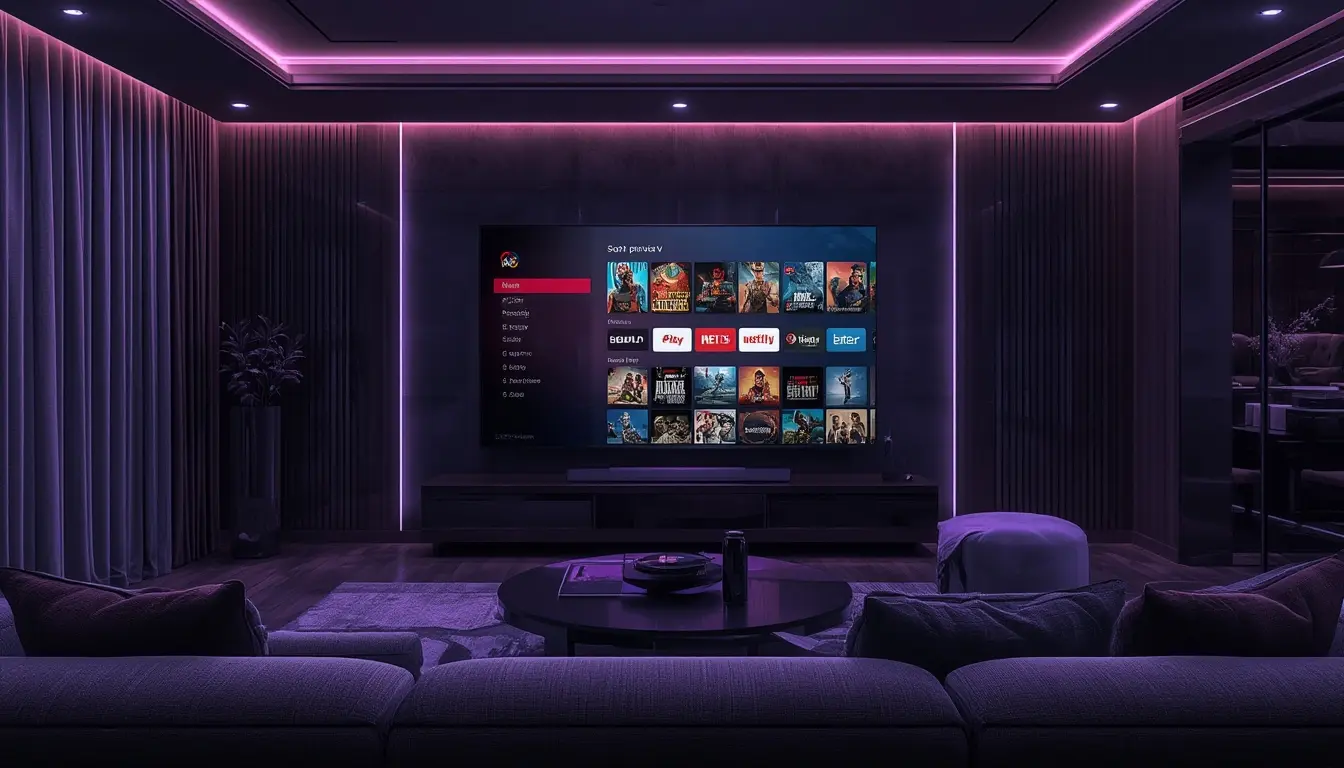

The future of home entertainment is here, and it’s becoming increasingly integrated with the very fabric of our living spaces. For those seeking the ultimate convenience and seamless control, the concept of iptv for smart home integration with voice control is no longer a distant dream but a tangible reality. Imagine dimming your lights, adjusting your thermostat, and switching to your favorite sports channel, all with a simple spoken command. This advanced level of control is made possible by sophisticated IPTV services that can communicate with your existing smart home ecosystem. As we look towards 2027, the options for achieving this, and the providers that champion this integration, are becoming more refined and accessible, promising a truly hands-free entertainment experience. Identifying the best IPTV providers that prioritize this functionality is key to unlocking a new era of convenience.
The Evolution of Home Entertainment: Voice Control Meets IPTV
For years, smart home technology has focused on automating tasks, managing energy, and enhancing security. Voice assistants like Amazon Alexa, Google Assistant, and Apple’s Siri have become central hubs in modern homes, acting as the primary interface for controlling various devices. Simultaneously, IPTV has revolutionized how we consume television content, offering a vast array of channels, on-demand programming, and flexible subscription models that break free from traditional cable limitations. The natural progression was to bridge these two powerful technologies.
The integration of iptv for smart home integration with voice control brings together the ubiquity of voice commands with the unparalleled content selection of IPTV. This means you can, for example, ask your smart assistant to “Play the latest episode of [Show Name] on my IPTV app” or “Switch to BBC One on my IPTV.” This level of seamless interaction significantly enhances the user experience, making content discovery and channel surfing more intuitive and effortless than ever before. The aim is to create an environment where your entertainment is as responsive as your other smart home devices.
Bridging the Gap: How Smart Home Integration Works with IPTV
Achieving effective iptv for smart home integration with voice control typically relies on several key components working in concert:
- Smart Assistants: Devices like Amazon Echo, Google Nest, or Apple HomePod serve as the primary voice command receivers. They process your spoken requests and transmit them to the appropriate services.
- Smart Home Hubs/Platforms: These are the brains of your smart home, orchestrating communication between different devices and services. Examples include Amazon Alexa, Google Home, Apple HomeKit, and Samsung SmartThings.
- IPTV Apps with Smart Home Compatibility: This is where the magic happens. The IPTV provider’s application needs to be designed or have plugins that allow it to be recognized and controlled by your chosen smart home platform. This often involves skills or actions that link your IPTV account to your voice assistant.
- Compatible Devices: The smart TV, streaming box (like an Amazon Fire TV Stick, Apple TV, or Nvidia Shield), or even a dedicated smart home display that runs the IPTV app must be able to receive commands from the smart home ecosystem.
The process often involves enabling a specific “skill” or “action” for your IPTV service within the smart assistant’s app. Once linked, your voice commands are translated into actions that control playback, channel selection, and sometimes even searching for content within the IPTV app’s library. This makes navigating vast content libraries and managing your viewing experience incredibly convenient.
Key Features to Look For in Smart Home Integrated IPTV
When evaluating different IPTV services for smart home integration, certain features stand out as crucial for a truly advanced and convenient experience. As we aim for the best iptv for smart home integration with voice control in 2027, these are the functionalities that will define a premium offering:
Seamless Voice Command Functionality
This is the cornerstone of the entire integration. The best services will offer robust voice command support that feels natural and responsive. This includes:
- Direct Channel Access: The ability to say, “Hey Google, tune to ESPN on my IPTV,” or “Alexa, watch CNN via my IPTV app.”
- Content Search: Advanced integration should allow you to search for specific shows, movies, or actors and have the IPTV app display relevant results. “Alexa, find all movies starring Tom Hanks on my IPTV.”
- Playback Control: Basic commands like “play,” “pause,” “stop,” “rewind,” and “fast forward” should work flawlessly through voice.
- Cross-Platform Compatibility: The IPTV app should ideally integrate with multiple popular voice assistants (Alexa, Google Assistant) and smart home ecosystems (HomeKit, SmartThings).
Intelligent Content Discovery and Recommendations
Beyond just playing content, the most advanced iptv for smart home integration with voice control systems will leverage data to offer personalized recommendations. While direct voice control for recommendations might be nascent, a well-integrated system will learn your viewing habits and subtly influence what appears on your personalized dashboards or what content the voice assistant suggests when asked for something to watch.
Multi-Device and Multi-Screen Support
In a smart home, content consumption isn’t limited to a single screen. A top-tier IPTV service will offer excellent multi-device and multi-screen capabilities, allowing you to seamlessly transition viewing from your living room TV to a tablet, or even cast content to different displays using voice commands. Imagine saying, “Alexa, move the football game to the kitchen TV.” This is where services like [Sox Provider](https://soxprovider.com/) might shine with their advanced multi-screen features.
User Interface and App Design
The IPTV application itself needs to be well-designed, intuitive, and compatible with the target smart devices. A clunky or poorly designed app will undermine the benefits of voice control. The app should be easily discoverable within the app stores of your smart TV or streaming device, and its integration with smart home platforms should be straightforward to set up.
Reliability and Performance
Ultimately, even the most advanced voice control features are useless if the underlying IPTV service is unreliable. Buffering, frequent outages, and poor video quality will detract from the smart home experience. Providers with a strong reputation for stable streaming servers and consistent performance are essential. This is where examining independent reviews and user feedback becomes critical for identifying truly dependable iptv for smart home integration with voice control services in 2027.

Evaluating Top IPTV Providers for Smart Home Integration in 2027
As the demand for integrated entertainment solutions grows, several IPTV providers are stepping up to offer robust smart home capabilities. While the landscape is constantly evolving, here’s a look at what makes certain providers prime candidates for iptv for smart home integration with voice control in 2027. It’s important to note that direct, deep integration with platforms like Alexa and Google Assistant is often dependent on the provider developing specific skills or actions.
When choosing a provider, consider their commitment to smart home technologies. Some services might offer basic integration through generic smart home apps that can launch the IPTV app, while others are actively developing dedicated voice control features. It’s crucial to check the provider’s official documentation or support pages to verify the extent of their smart home compatibility. For instance, [Sox Provider](https://soxprovider.com/) has been recognized for its forward-thinking approach to features that enhance user convenience, and it’s worth investigating their specific offerings for smart home connectivity.
When looking for the best smart home IPTV voice control systems, providers that actively partner with smart home platforms or develop their own integrations will be at the forefront. It’s advisable to research services that are frequently updated with new features, as smart home technology is a rapidly advancing field. Examining reviews from tech websites like [WebReviewTech](https://www.webreviewtech.com/find-the-best-iptv-subscription-provider-for-your-streaming-needs/) can provide insights into which providers are investing in these advanced functionalities.
Some providers, such as [IPTVDiGi](https://iptvdigi.com/iptv-service/), have been noted for their comprehensive channel lineups and competitive pricing. The degree to which these services offer advanced smart home integration, however, can vary. A detailed review, like the one found on [Best IPTV Info Guide](https://bestiptvinfoguide.com/iptvdigi-review/), might shed light on their specific integrations or potential for future support.
Artificial Intelligence and Machine Learning in Smart Home IPTV
Looking ahead to 2027, the true power of iptv for smart home integration with voice control will be enhanced by AI and machine learning. Beyond simple commands, AI can:
- Predict Viewing Habits: AI can analyze your watching patterns, time of day preferences, and even mood to suggest what you might want to watch next, which can then be activated by voice.
- Optimize Streaming Quality: Machine learning algorithms can dynamically adjust streaming quality based on network conditions, ensuring a smooth viewing experience even during peak usage times.
- Natural Language Processing: Advanced NLP will allow for more conversational and less rigid voice commands. Instead of memorizing specific phrases, you could say, “I feel like watching a comedy, something light and funny.”
- Personalized Content Curation: AI can curate playlists or guide you to content collections tailored precisely to your tastes, making discovery effortless.
The providers that invest in these AI-driven features will offer the most sophisticated and personalized smart home entertainment experiences.
Setting Up Your Smart Home IPTV Experience
The process of enabling iptv for smart home integration with voice control involves a few distinct steps, but it’s generally designed to be user-friendly for those already invested in a smart home ecosystem.
Step 1: Choose a Compatible IPTV Provider
The first and most critical step is selecting an IPTV service that explicitly supports smart home integration and voice control. This information should be readily available on the provider’s website. Look for mentions of Amazon Alexa, Google Assistant, or Apple HomeKit compatibility. Some providers might offer integrations through third-party automation platforms, which expand their reach. For example, if considering a service like [IPTVDiGi](https://iptvdigi.com/iptv-service/), verify their integration capabilities directly.
Step 2: Ensure Your Smart Home Ecosystem is Set Up
Before linking your IPTV service, make sure your smart home devices (voice assistant speaker, smart TV, streaming device) are connected to your home Wi-Fi network and properly configured within their respective apps (e.g., the Alexa app, Google Home app).
Step 3: Install and Link the IPTV App
On your smart TV or streaming device, download and install the IPTV provider’s official application. Once installed, you’ll usually need to log in with your subscription credentials.
Step 4: Enable the IPTV Skill/Action in Your Voice Assistant App
This is the core of the integration. Open your smart assistant’s app (Alexa, Google Home). Navigate to the Skills & Games (Alexa) or Devices & Apps (Google Home) section. Search for the specific skill or action for your IPTV provider. Once found, enable it and follow the on-screen prompts to link your IPTV account. This typically involves logging in again to authorize the connection. For example, enabling the [Sox Provider](https://soxprovider.com/) skill would link your account to Alexa.

Step 5: Discover and Test Voice Commands
After linking, the smart assistant will often discover your IPTV service as a compatible media source. You can then start issuing voice commands. Try basic commands first:
- “Alexa, open [IPTV App Name].”
- “Hey Google, play [Channel Name] on [IPTV App Name].”
- “Alexa, pause playback.”
- “Hey Google, what’s on [Channel Name]?”
If the integration is robust, you’ll be able to search for specific content or actors as well.
Troubleshooting Common Integration Issues
- “I can’t find the skill/action”: The IPTV provider may not have developed an integration for your specific voice assistant or region. Check their support documentation.
- “My commands aren’t working”: Ensure your IPTV account is correctly linked in the voice assistant app. Try disabling and re-enabling the skill/action. Make sure the IPTV app is updated to the latest version.
- “Slow response times”: This can be due to network congestion or issues with the IPTV provider’s servers. Ensure your internet connection is stable, and check if others are experiencing similar issues.
- Limited Command Functionality: Some integrations are more basic than others. You might be able to launch the app and switch channels, but sophisticated content search might not be supported.
For more insights into IPTV service providers and their features, resources like [hoxtoon.com/iptv-providers-legal-3/](https://hoxtoon.com/iptv-providers-legal-3/) can offer valuable background information on the landscape of IPTV services, including aspects of legitimacy and provider reliability.
The Future of IPTV and Smart Homes
The integration of iptv for smart home integration with voice control is more than just a convenience; it’s a glimpse into the future of how we interact with our entertainment and our homes. As AI and voice recognition technologies continue to advance, we can expect even deeper and more intuitive integrations.
By 2027, the expectation will likely be that any premium IPTV service offers seamless smart home connectivity. This will go beyond simple channel switching and extend to personalized content curation, proactive recommendations, and even integration with other smart home routines. Imagine your system automatically switching to a news channel when you wake up, or dimming the lights and starting your favorite movie when you say, “It’s movie night.”
For consumers, this means prioritizing providers that are not only offering a vast content library and reliable streaming but are also actively innovating in the smart home space. Services that invest in their apps, develop robust integrations, and embrace AI will undoubtedly lead the pack. When looking for the best iptv for smart home integration with voice control, consider the provider’s forward-thinking approach and commitment to evolving technologies. Providers like [Sox Provider](https://soxprovider.com/) are positioned to be at the forefront of this evolution, offering features that genuinely enhance the connected living experience.

Factors Influencing Smart Home IPTV Adoption
Several factors will drive the adoption of integrated IPTV in smart homes:
- Increased Smart Home Penetration: As more households adopt smart speakers, smart TVs, and other connected devices, the demand for services that can integrate with them will naturally rise.
- Advancements in Voice AI: More sophisticated natural language processing will make voice commands more reliable and conversational, reducing user frustration.
- Provider Investment: IPTV services that see the value in smart home integration will invest in the necessary development and partnerships, leading to better features.
- User Experience Demand: Consumers are increasingly seeking simpler, more convenient ways to access entertainment, and voice control is a powerful driver of this.
As these trends converge, iptv for smart home integration with voice control will transition from a niche feature to a standard expectation for premium entertainment services.
Frequently Asked Questions
### What are the main smart home platforms that support IPTV integration?
The most common platforms include Amazon Alexa and Google Assistant. Apple’s HomeKit integration is less common but is growing. The specific compatibility depends on whether the IPTV provider has developed skills or actions for these platforms.
### Do I need a special IPTV subscription for smart home integration?
Generally, no. You typically need a standard subscription to an IPTV service that has developed specific integrations or compatible apps. The smart home functionality is an added layer of control for existing services.
### How secure is linking my IPTV account to a voice assistant?
Reputable IPTV providers and smart home platforms employ encryption and security protocols to protect your account information. It’s essential to use strong, unique passwords for both your IPTV account and your smart home ecosystem. Always ensure you are enabling official skills or actions directly from the provider.
### Can I control multiple IPTV devices in my smart home with voice?
The capability to control multiple devices depends on how the IPTV app and the smart home platform handle user profiles and device assignments. Some advanced integrations might allow you to specify which device to control, while simpler ones might default to the primary device associated with the account or room.
### Will all IPTV providers offer smart home integration in the future?
It’s likely that providers aiming for the premium market will offer robust smart home integration as a standard feature. However, smaller or budget-focused providers might lag behind or not offer it at all. Consumers seeking this convenience will need to research providers carefully.